Ethylene Diamine TetraAcetic acid (EDTA) is a non-toxic amino acid that was synthesized in Germany in 1931. It was designed to treat severely lead poisoned patients. Prior to its development, there was little that could be done for these unfortunate people. They died because of the tremendous toxic effect of lead on the brain, nervous system and other major organs.
Chemists in the food processing industry are quite familiar with chelation chemistry and EDTA. The research literature contains more than 3,000 reference papers concerning EDTA. EDTA is used as a preservative in countless foods… canned, bottled, and dry packed.
The chemistry of blood banking is another source of EDTA information. The substance is used in the performance of many blood tests. Banked blood has small amounts EDTA added to prevent blood cells from breaking down. EDTA is known to be a calcium blocking agent, a potent coronary vasodilator. In other words, EDTA can bind or chelate calcium as well as other minerals in the body. It will remove calcium particles deposited in arterial wall plaques and atheromas. In addition, EDTA blocks the slow calcium currents in the arterial wall, resulting in arterial vasodilation.
Probably the major underlying condition leading to cardiovascular disease is atherosclerosis, also known as hardening of the arteries. This degenerative disease, in time, can narrow or block arteries in the heart, brain and other parts of the body. It may begin early in life. The linings of the arteries become thickened and roughened by deposits of fat, cholesterol, fibrin (a clotting material), cellular debris and calcium.
As this buildup on the inner walls becomes hard and thick, arteries lose their ability to expand and contract. The blood moves with difficulty through the narrowed artery channels. This makes it easier for a clot to form that will block the channel (lumen) and deprive the heart, brain and other organs of a necessary blood supply. In such a situation, how can dilator drugs possibly be effective?
When a complete blockage occurs in a vessel to the brain, the result may be a cerebral thrombosis, a form of stroke. Based on what is known, scientists admit the relationship between the amount of cholesterol and saturated fats in the bloodstream, and coronary artery disease a blockage of the arteries that supply blood to the heart muscle itself.
To review precisely what chelation is, consider the following: The electromagnetic attraction of fats and proteins for divalent calcium that has wandered through the injuries in blood vessel walls, is the same process that enables EDTA to remove calcium and fat from the plaque that occludes the vessel. A study of over six hundred human aortas has demonstrated alterations in the elastic tissue with accumulations of calcium prior to the deposition of fat and cholesterol. (Blumenthal, 1944).
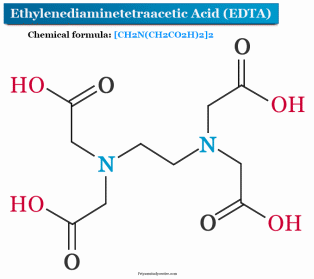
Calcium has two positive charges which are called valences. Hence, calcium is divalent. Calcium is strongly attracted electromagnetically by the open ended, molecular structure of EDTA that is circulating in the blood during the chelation treatment. This results in the calcium ion being incorporated into the EDTA molecular structure, forming a closed ring. When this process takes place, the metal is said to be chelated and EDTA is termed the chelating agent.
When calcium (or other divalent metals such as lead, mercury, cadmium, aluminum, etc.) is chelated by EDTA, the original electromagnetic attraction is lost, and the fatty debris is dissolved by circulating blood and metabolized. The calcium EDTA molecule, now inactive and non toxic, is carried by the blood until it passes through the kidneys. It then is removed from the body via the urine.
The solid sticky plaque goes into solution and is harmlessly removed. By this unique mechanism, dangerous solids are converted to a liquid, then transported away to be eliminated. This is a natural, normal phenomenon of body chemistry.
Norman E. Clarke, Sr., M.D., a cardiologist at Providence Hospital in Detroit, was the first American to discover the many beneficial effects of EDTA chelation. When he treated battery factory workers for lead poisoning, they reported relief of their symptoms of chest pain (angina), arthritis, intermittent claudication (severe leg pain due to plugged arteries in the legs), as well as their symptoms of lead poisoning.
Dr. Clarke, now in his eighties and very active in practice and on the lecture circuit, is recognized as a chelation pioneer in the Soviet Union. The Russians use chelation therapy as the second most common treatment for arteriosclerotic artery disease. It is also the preferred method of treatment in Czechoslovakia. EDTA chelation is administered with great success for blood vessel disease, stroke, senility, diabetes, kidney diseases, and other degenerative diseases in Germany, Switzerland, Mexico and Canada, to name just a few countries. -
Excerpts from "Chelation Can Cure" by Dr. E.W. McDonagh
Summary Points
· EDTA removes abnormally located metal ions, such as copper and iron, that accumulate with age.
· EDTA removes lead, cadmium, aluminum, and other metals, thereby restoring enzyme systems to their proper functions.
· EDTA lowers blood calcium and thus stimulates the production of parathormone from the parathyroid glands. This mild pulse of parathormone is responsible for the removal of calcium from abnormal locations (such as arteries) and the deposition of calcium in locations (such as bones) where it should be. This accounts for the mild recalcification of osteoporotic bones seen with EDTA.
· EDTA stimulates the enlargement of small vessels, so that they serve the purpose of collateral circulation around a blockage, rendering the blockage irrelevant.
· EDTA controls free radical damage due to lipid peroxidation by serving as a powerful antioxidant.
· EDTA enhances the integrity of cellular and mitochondrial membranes.
· EDTA helps reestablish prostaglandin hormone balance.Prostaglandins, among other things, are responsible for the balancing act between contraction and relaxation of arterial walls and between clotting and the free flow of blood. Prostaglandins are produced from fatty acids, therefore lipid peroxidation upsets the balance of these vital hormones. EDTA chelates out the catalyzing metallic co-enzymes and thus inhibits lipid peroxidation, also serving the same function as an antioxidant.
· EDTA reduces the tendency of platelets to cause coagulation too readily. This tends to prevent inappropriate thrombosis, which blocks coronary arteries during a heart attack.
·
EDTA increases tissue flexibility by uncoupling age-related cross-linkages that are responsible for loss of skin tone and for wrinkling
















.png)











.png)
































.png)































.png)